

FFE detectors protect key aircraft maintenance facility
A combination of smoke and flame detectors are used to ensure that fires are rapidly and reliably detected inside the aircraft painting hangar of an important regional airport in the UK.
Key Facts
- In addition to a Fireray 5000 beam smoke detection system, a network of nine Talentum UV/IR2 infrared flame detectors has been installed to protect the spray-painting hangar at Cambridge International Airport.
- All types of fire are rapidly detected with high false alarm immunity due to a combination of wide-band infrared detectors, comparison of signals from both UV and IR regions, and flicker analysis algorithms.
- Exd (explosion-proof) versions of the detectors are used to prevent any chance of ignition of the flammable paint spray.

Cambridge International Airport
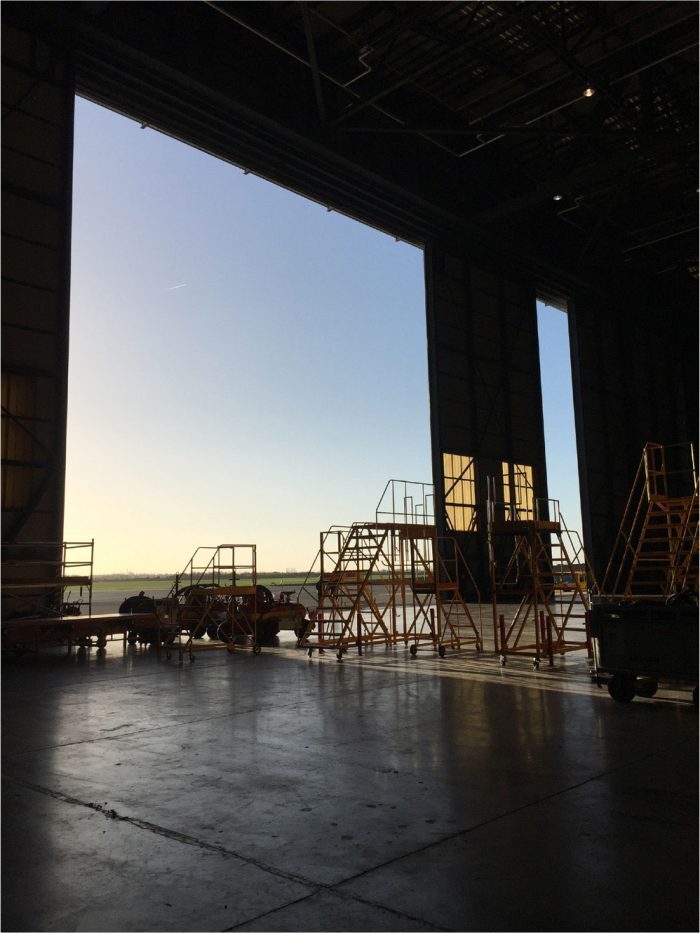
Cambridge International Airport is situated close to one of Europe’s leading university cities and is at the heart of an important hub of innovative industrial development. The airport houses extensive servicing and repair facilities, including a large spray-painting and refinishing hangar that can accommodate aircraft up to the size of airliners such as the Airbus 330 and Boeing 747 and 777. This area, which contains a variety of potential fire threats, is now enjoying the protection of a network of FFE’s smoke and flame detectors.
The challenge
All sizes and types of aircraft, both civilian and military, have been painted in the hangar at the airport. Each of these is a very valuable vehicle and so it was decided that, in addition to using a Fireray 5000 reflective beam smoke detector near the ceiling of the hangar, a faster means of detection was also needed to give the earliest possible alarm of a fire. Infrared flame detection offered a potential solution, but given the presence of other heat sources from tooling and instrumentation, it was also important to ensure that false alarms should be kept to a minimum.
Other challenges to the detection system were presented by the large volume of the hangar, and the variety of flammable and combustible materials present. Among these was the paint itself which, being solvent-based, is highly flammable or even explosive when dispersed in the air as fine droplets. Additionally, modern aircraft are made from a range of different materials, some of which can burn under certain conditions. Aluminium dust and swarf are highly flammable, and many plastics and composites will also burn steadily if ignited with a sufficiently strong ignition source. Add to this cleaning fluids, paint stripper and aviation fuel, and you have a potent cocktail of fire threats which a fire protection system must be able to detect and extinguish.
Universal, accurate and rapid detection
Requiring a system that could detect many different types of fires accurately and rapidly over large distances, the installer EFire selected FFE’s Talentum UV/IR2 flame detectors.
Flames can be detected by the signals that they emit in the ultraviolet, visible and infrared regions of the electromagnetic spectrum. Most infrared detectors focus on the signal at 4.3 μm which is emitted by molecules of carbon dioxide (CO2) in a flame. As shown in the diagram, this is a strong peak in the emission spectrum of hydrocarbon fuel fires such as petrol, but it weakens for oxygenated fuels such as alcohols and may be entirely absent in some instances, such as in hydrogen fires where carbon dioxide is not produced.
The secret to detecting a wide range of fuel fires lies in examining a broader segment of the electromagnetic spectrum. This is because the relative proportions of signals from different spectral regions vary for different fuels, as can be seen in the diagram. The IR sensors in Talentum detectors feature BroadSpectrum™ Technology which measures the region between 1 and 3 μm, and therefore captures the strong infrared emissions from all flames.
In a large building like a hangar, air currents are quite common as the temperature throughout the internal volume is highly unlikely to be constant. Infrared flame detectors are completely unaffected by draughts or convection currents, which can significantly delay detection of a fire if the smoke is blown away from a point smoke detector. BroadSpectrum™ Technology also mitigates the problem of soot and smoke blocking the infrared signal from the flame. If the CO2 signal at 4.3 μm is reduced or blocked, this can seriously hamper or even prevent detection using narrow-band detectors, but Talentum’s wide-band sensors reduce the risk of this problem by measuring across a broader range of the flame’s signal.
UV/IR2 Talentum detectors also include an ultraviolet sensor that increases false alarm immunity. Whereas most fuel fires have low emissions in the ultraviolet region (as shown in the previous diagram), other light sources such as arc welding and lightning give much stronger UV signals. By processing signals from different parts of the electromagnetic spectrum (the flame’s “signature”), these phenomena can be discounted by the detector. In addition, Talentum detectors contain an algorithm that analyses the flicker of the infrared source.
This can distinguish between the flicker of free-burning flames due to their entrainment of air, and the non-flickering flames associated with premixed air and fuel systems such as those used in welding.
In tests carried out at FFE’s factory in Hertfordshire, UK, different fuel pan fires were tested against the Talentum UV/IR2 detector. Both the yellow flame of a heptane fire and the blue flame of burning methylated spirits were detected in an average time of 8 and 12 seconds respectively from a distance of 60 metres, while hydrogen’s invisible flame caused the detector to go into alarm at a distance of 30 metres in 16 seconds. These distances were more than sufficient for the hangar at Cambridge Airport, and the results gave confidence that the system would be able to detect fires from all the different fuels present in the spray-painting area.
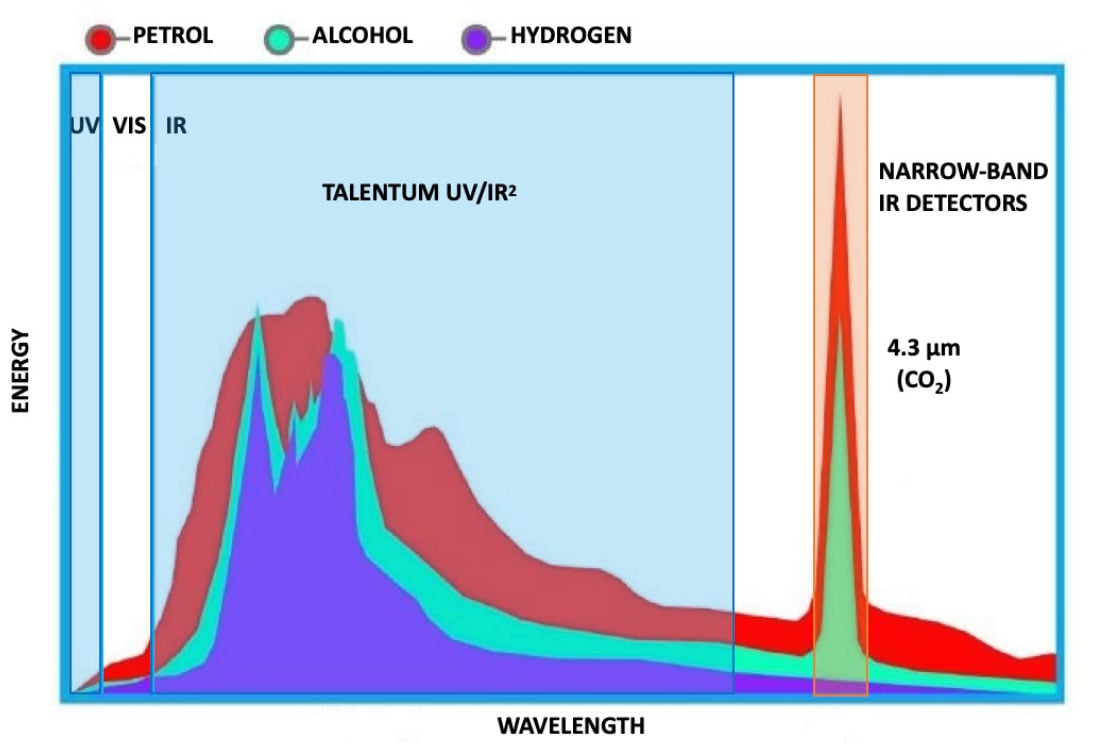
BroadSpectrum™ Technology detects flames from many types of fires

Safe and low maintenance detection
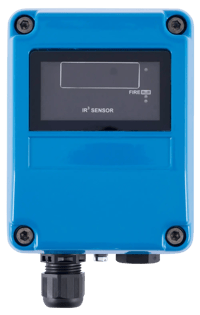
“Because of the explosive nature of the paint used in the hangar, explosion-proof flame detectors were necessary,” commented Brian Myall, Fire Safety Officer for Marshall Aerospace and Defence Group, the company which manages the airport. The Talentum flame detectors used in this application were the Exd type, supplied in a strong protective case made from copper-free aluminium alloy which totally seals the detector inside, preventing any risk of sparks from the detector igniting flammable vapour in the atmosphere.
It was also important that the detectors could be installed in relatively inaccessible locations to give adequate coverage of the hangar, which had implications for maintenance of the system. Talentum detectors contain an in-built test that can be activated remotely by applying a voltage signal. This tests the detector circuitry and gives an alarm if the test is passed. Additionally, FFE supplies a portable flame detector test unit, which can be used to simulate flame signals with a range of flicker frequencies and signal intensities to check the response of the detectors. This operation can be performed from a typical distance of 5 metres from the detector, again avoiding the need for access to difficult locations. These tests, combined with occasional cleaning of the detector windows (which is relatively easy due to the waterproof casing of the explosion-proof detectors), is all the maintenance that the system requires.
Peace of mind for operators and users
EFire installed a network of nine Talentum detectors in the spray-painting hangar. With each detector having a field of view of approximately 90° and a range in excess of 40 metres, this was sufficient to provide surveillance over the entire hangar volume for the slightest sign of flames, giving peace of mind to the owners of the valuable aircraft under repair.
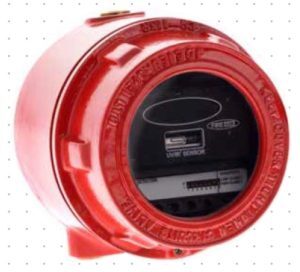
Explosion-proof (Ex d) Talentum flame detector
|
|
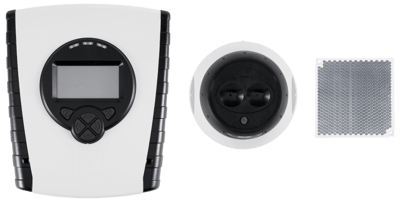
| Fireray 5000 | Talentum Flame Detector UV/IR2 |
Our chosen installer specified Talentum UV/IR2 flame detectors and we are very impressed by their performance and reliability so far.
Brian Myall, Fire Safety Officer for Marshall Aerospace and Defence Group