

Fireray beam detectors protect giant pandas at Malaysia’s national zoo
Optical beams offer the perfect combination of rapid, accurate, and cost-effective smoke detection needed to protect visitors and animals alike.
Key Facts
- The large atrium of the panda enclosure required a smoke detection system that would rapidly react to trigger a smoke extraction system and alert firefighters.
- Fireray optical beam detectors offered the most cost-effective solution that could meet the performance requirements.
- Fluctuating ambient light levels were compensated for using FFE’s patented Light Cancellation Technology.
A unique ‘habitat’
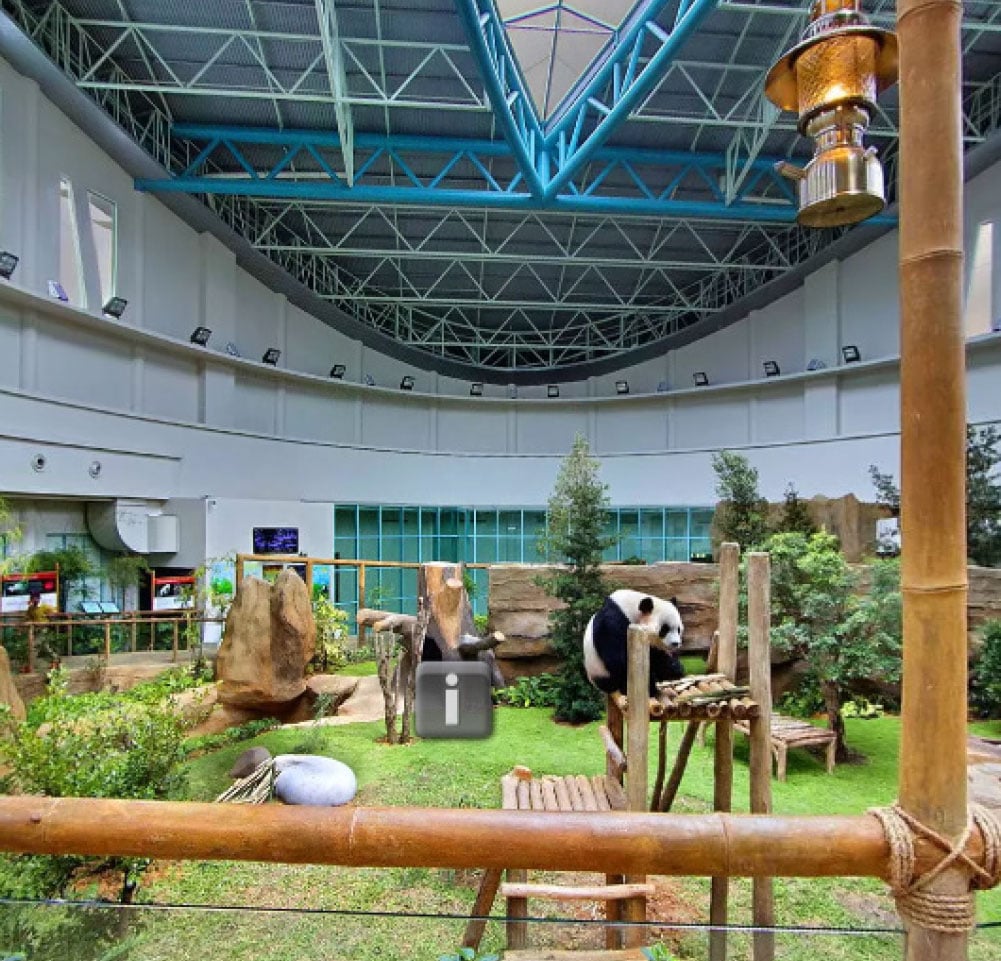
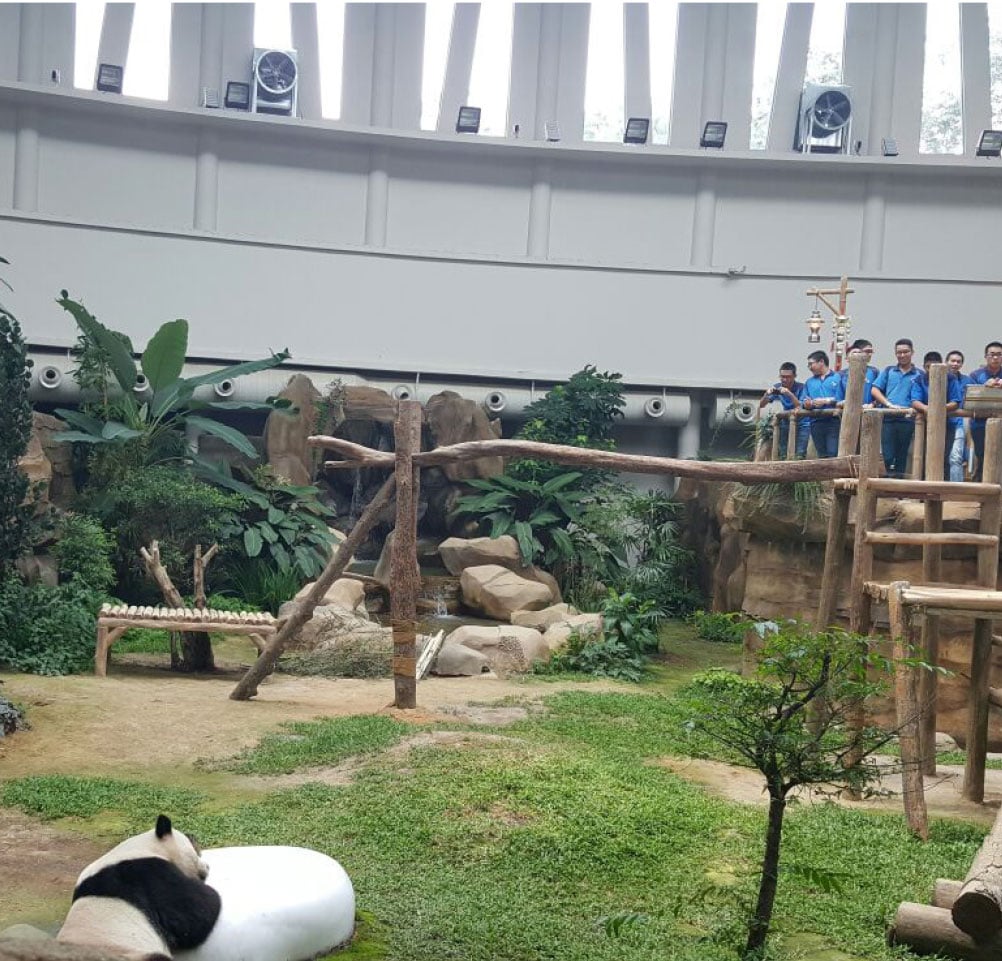
Zoo Negara in Kuala Lumpur, the national zoo of Malaysia, has attracted millions of visitors since it opened in 1963. Among its many attractions, the giant pandas hold a special affection for people. These rare and iconic bears have their own enclosure at the zoo, complete with a walkway to allow intimate viewing by the many visitors who flock to see them every year. Fireray beams have been installed in this large, open space to provide rapid smoke detection and protect both people and pandas.
The enclosure’s atrium has a high ceiling and is surrounded by windows to keep the space well ventilated and lit by as much natural light as possible (though there are spotlights also installed for use on cloudy days). Such large volumes are difficult, not to mention very expensive, to adequately protect using conventional point smoke detectors, due to the number of detectors needed and the resulting complexity of the wiring network.
Strategic thinking
The fire protection strategy selected by the zoo is to rapidly detect any smoke during the earliest stages of a fire, and then immediately activate a smoke spill fan. These are designed to extract smoke from buildings to limit the inhalation of the potentially lethal cocktail of chemicals it contains, which is usually the biggest cause of death in fires. Their purpose is to create and then maintain a layer of smoke-free air above the floor, allowing an opportunity for occupants to evacuate safely, and firefighters to gain access to extinguish the fire. Known as smoke extraction systems in Europe and North America, they are a common requirement in Malaysian buildings.
In such a large space, rapid fire detection is absolutely essential if the fire is to be tackled successfully. “Because of the atrium’s high ceiling, conventional smoke detectors were not suitable for this installation,” commented Mr K. S. Yau of Prospect Safety Technology Sdn Bhd, the installation company. “A sprinkler system was also not an option due to their slower response times. Beam detectors were therefore best for this installation due to their extremely fast response times,” he added.
The reason why beam detectors can detect smoke so quickly relates to the long length of the beam. A receiver measures the beam’s light intensity and can detect the slightest reduction due to scattering of the light by smoke particles anywhere along the beam path. This then triggers the alarm signal when a pre-determined threshold is reached.
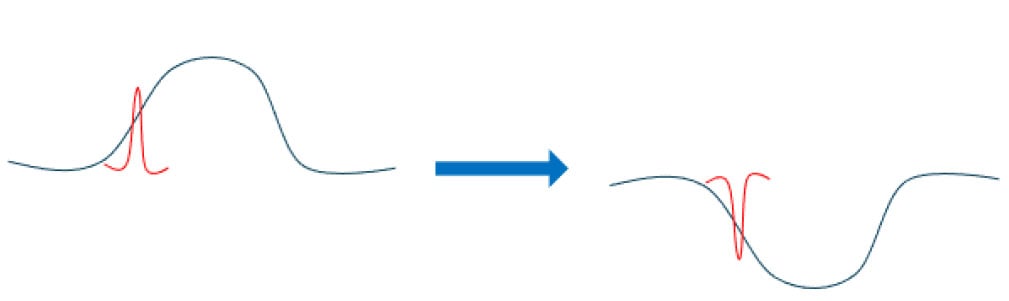
Step 1: Invert the incoming light – a combination of ambient visible light (blue) and infrared beam (red)

Step 2: Filter the inverted signal to remove the infrared beam wavelengths
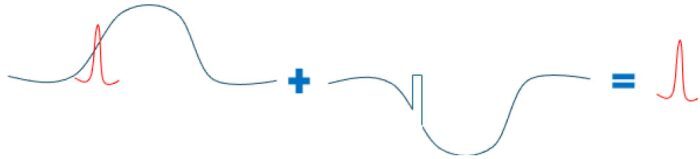
Step 3: Add the filtered signal to the incoming light to isolate the beam signal
Innovative features provide a complete solution
Another challenge facing the smoke detectors in the panda enclosure is the ambient light level, which often fluctuate widely during the day as the sun moves across the sky or when the spotlights are activated. Varying light levels can be a problem for beam detectors, but FFE have tackled this using their patented Light Cancellation Technology. This employs electronic signal processing within the detector to isolate the infrared beam’s signal from the broad range of visible light wavelengths in the room (a simplified view of this process is shown above right). With the effect of the ambient light removed, the slightest change in the infrared beam can be accurately detected, giving the rapid early-stage smoke detection that the zoo needed.
According to Mr Yau, there are additional benefits from using Fireray beam detectors, such as lower installation costs than alternative detection systems, and less time spent on installation and maintenance. Although the lenses of the beam emitter and receiver do need cleaning periodically, FFE have developed a contamination compensation algorithm, which can correct for a gradual build-up of dust on its lenses over time, reducing the frequency of manual cleaning required.
FFE are honoured to be selected to supply the beam detectors for the panda enclosure at Zoo Negara, and are delighted to be considered as a trusted partner for such an important installation.

Fireray Optical Beam Detectors